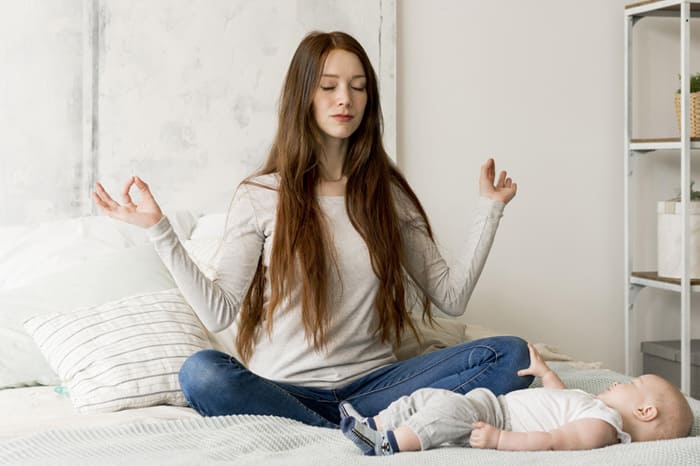

You might not call it anxiety at first. You might just say you feel “on edge,” “wired,” or “off.” Maybe you’re checking your baby’s breathing. Over and over. Maybe you keep googling the same thing, looking for a different result. Maybe you’re awake at 3 a.m. running through every possible “what if.” Or maybe you just can’t seem to turn it off.
People around you might say, “You’re just being careful.” But inside, you know it’s more than that. You’re exhausted, but your body won’t let you rest.
What postpartum anxiety can actually feel like
For some, it’s the constant scanning for danger, like your brain’s stuck in “what if” mode. You might play out scenarios, or worse, visualize awful things happening. For others, it’s irritability, tightness in your chest, or that feeling that something terrible is about to happen.
It can show up as:
- Racing thoughts that don’t stop
- Difficulty sleeping even when the baby sleeps
- Feeling jittery, shaky, or on alert all the time
- Trouble focusing or relaxing
- Over-checking, over-preparing, over-researching
- Physical symptoms like dizziness, nausea, or a racing heart
This isn’t just worry. It’s your nervous system stuck on high alert.
Why it happens
Even if you’ve never felt anxious before, it can appear in postpartum. Hormone shifts, family history, lack of sleep, changes in identity, and trauma from birth or past experiences can all contribute. For some, it’s connected to previous anxiety or perfectionism. For others, it starts out of nowhere.
Because postpartum anxiety is less talked about than depression, and because on the outside, it can often look like you’re doing reality well, symptoms are often missed or dismissed. You might even hear, “That’s just being a new mom.” But when the worry takes over your day, it’s time to seek support.
What you can do next
If you’re wondering whether what you’re feeling might be postpartum anxiety, you’ve already done something super important: you noticed. This can be really hard to do when everything in you is focused on being a mom, and figuring out the tiny human in your life.
Know that you don’t need to push through, fix it on your own, or wait until it gets worse. Talking to a therapist, your doctor, or even someone you trust can start to help you to feel different.
Therapy can help you make sense of what’s happening. It can help you to understand what’s anxiety, what’s exhaustion, and what’s the “normal” transition into parenthood. It can help you slow your mind down and feel safe in your body again.
You don’t have to hold this alone.
If this feels familiar, reach out to our team at Bloom Psychotherapy. We specialize in postpartum transitions, anxiety, and emotional overwhelm. We’ll help you find calm, confidence, and a pace that actually fits this new season. We’re moms who get it. It’s not your fault. And with the right support, it can get lighter. Book online or connect with our Client Coordinator to find support today.
FAQs
What’s the difference between postpartum anxiety and normal worry?
Postpartum anxiety is constant, intrusive, and hard to control. It interferes with rest and daily life, even when things are okay.
Can postpartum anxiety show up months later?
Yes. It can appear any time in the first year- or even after weaning- when hormones shift again.
Is postpartum anxiety common?
Very. About 1 in 5 new parents experience postpartum anxiety, and many never realize that’s what it is.
Does therapy help with postpartum anxiety?
Absolutely. Therapy helps regulate your nervous system, quiet intrusive thoughts, and rebuild your sense of calm and safety.